
legacy-code

You are currently browsing articles tagged legacy-code.

I love the simplicity of content-driven themes like Tarski by Ben Eastaugh. The design stays out of the way and lets the writing do the talking (see how Terence Tao uses this theme). But Tarski was hopelessly out of date (last commits were 15 years ago), so I used Codex to refresh the codebase and make it work with newer versions of PHP and WordPress.

Here’s what I changed:

  • Added proper WordPress title-tag support and moved title generation to modern filters (document_title_separator and pre_get_document_title).
  • Removed the hardcoded tag from header.php.
  • Added wp_body_open() to improve compatibility with newer plugins.
  • Rebuilt the document title logic to match modern WordPress contexts (front page, home, archives, taxonomy, etc.).
  • Updated deprecated tarski_doctitle() to delegate to the new title builder.
  • Fixed PHP 8.x constructor deprecations in TarskiOptions and the recent posts widget.
  • Updated the widget to use posts_per_page, wp_reset_postdata(), and a safe offset.
  • Fixed PHP 8.x warnings around dynamic properties and header option checks.
  • Matched the Walker_Comment method signatures to avoid fatal errors in WordPress 6.9 / PHP 8.3.
  • Hardened option handling to avoid undefined index notices.

In addition, hosting on Bluehost required an explicit configuration change for PHP session garbage collection. I created or edited a .user.ini file with the following settings:

session.gc_probability = 1
session.gc_divisor = 100

I am deliberately conservative with respect to security, as PHP is not my primary language. If you notice any remaining issues or outdated patterns, pull requests are very welcome. I’ve put the refreshed code in a GitHub repo here: https://github.com/leoferres/tarski.git. I’m not really planning to maintain this code except for fixing small security vulnerabilities like I said above.
Tags: , , , , , ,

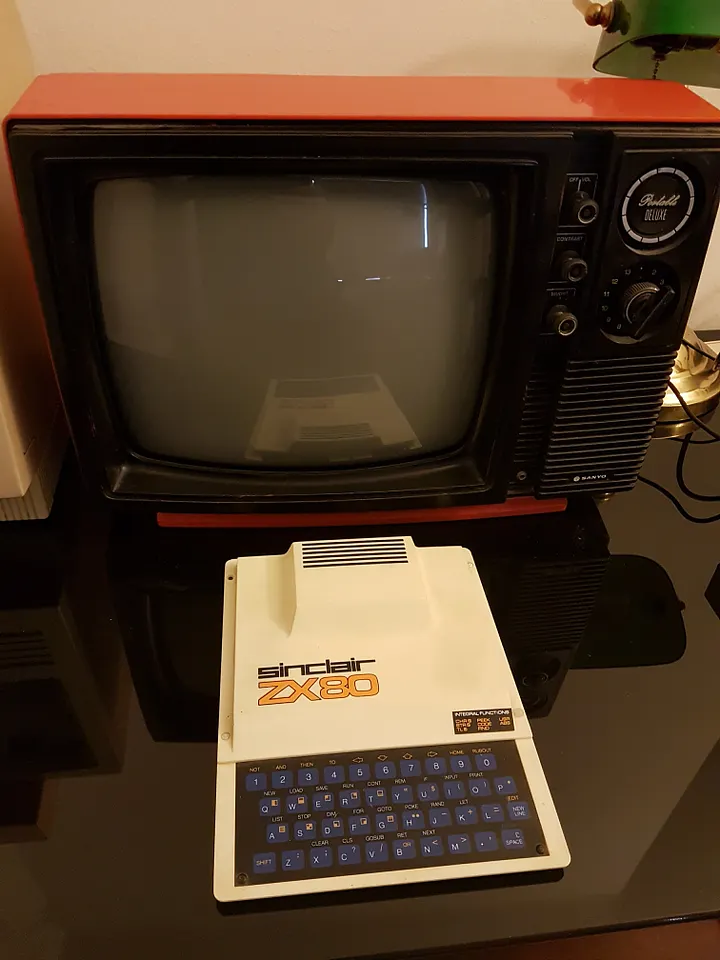
This is my original ZX80 computer (by the way, the TV is also from the 1980s, a Sanyo, Portable Deluxe… I like the orange color very much):

I bought this a few years ago on Ebay, and it’s probably one of my most prized possessions. It featured a whopping 1KB of RAM, no sound, and it was black and white.

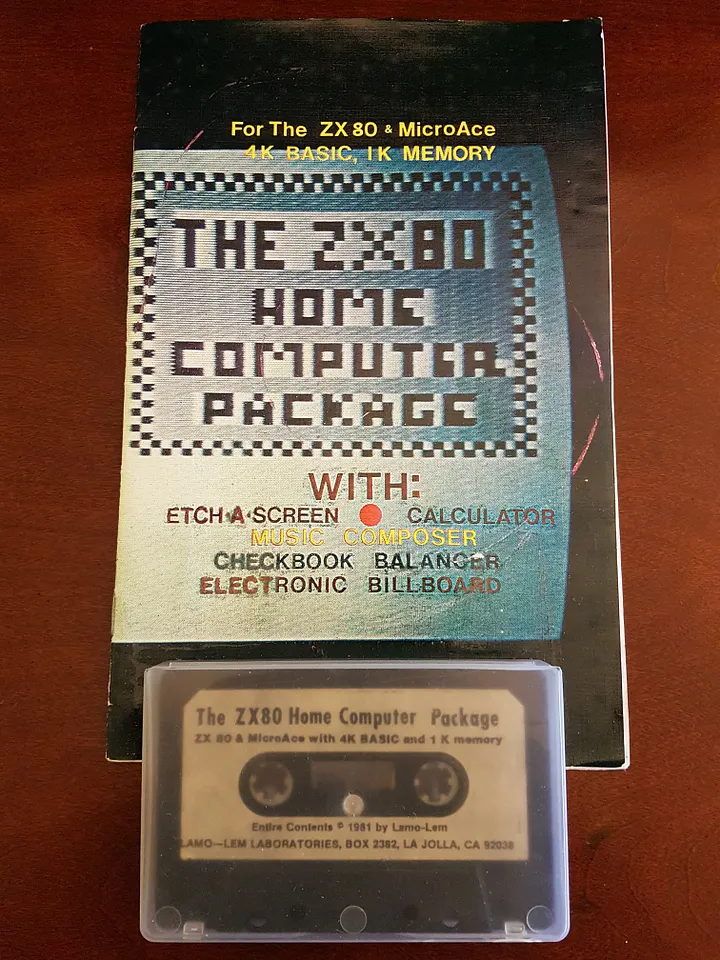
The original ZX80 came with a single “demo” cassette, produced by Lamo-Lem Laboratories in La Jolla, California, and an accompanying manual. The combo looked like this:

I have scanned the booklet and all the inserts in high resolution and made it available on the web in case someone else, like me, is interested in these technologies and the “early history” of home computing, Sinclair in particular.

I have uploaded five PDF files to my github account:

  1. The Lamo-Lem manual covers (1 page): This is a high-definition (1200 dpi, 17,347,913 bytes or about 17MB) photographic scan of both sides of the manual’s (very) soft cover (like the one in the picture above). You might have to rotate the pdf.
  2. The Lamo-Lem manual’s content pages (7 pages): This is a high-definition (1200 dpi, 10,833,875 bytes or about 10MB) text scan of the contents of the manual. The darker pages in the scan are in fact a darker beige in the original. This content explains how to use the different programs in the package.
  3. The Lamo-Lem inserts (1 page): This is a high-definition (1200 dpi, 9,279,479 bytes or about 9MB) photographic scan of the keyboard overlay that came with the manual. The yellow one (on top) is for the Composer, the blue one (bottom) is for the Checkbook Balancer. They may have been attached, given that the right margin shows a “Contents (r) by Lamo-Lem” message. Looks like it may just be a simple careless cutting by the original owner, but then again, maybe not, we know that these things were really very cheap!
  4. The Lamo-Lem manual’s content pages (1 page): This is a high-definition (1200 dpi, 2,276,034 bytes or about 2MB) text scan of the reference cards that came with the manual. The one on the left is the one for the Composer program and the one on the right is for the Etch-A-Screen program. There’s some annotation by the previous owner, I assume. Interesting that the character encoding was not ASCII.
  5. The Lamo-Lem ZX80 program design pages (2 pages): This is a high-definition (1200 dpi, 3,433,445 bytes or about 2MB) text scan of a helper for program design, archiving and maybe debugging. This is my favorite. It has sections for describing “named” variables, “one-letter” variables, arrays (with their parenthesis, A(), B(), …, Z()) and strings (A$, B$, …, Z$) and the coding itself. It’s like a paper comment section of a program. Notice that this was also intended for the ZX81.

I hope this is helpful to somone else.

DISCLAIMER: I’m not sure who owns the copyright for this, and I’d be grateful if anyone could tell me whether I’m violating any copyright laws. If so, I will take this information down asap. Still, I’d very much appreciate if the copyright holders would grant me their permission to post this online. This belongs to a museum! I’ve done due diligence in finding people related to Lamo-Lem Labs in La Jolla, California but have so far had no success.

Tags: , , ,